
Bruker Thesis Prize

The ESR Group of the Royal Society of Chemistry and Bruker Corporation are pleased to announce the 13th Bruker ESR Thesis Prize, set up to recognise outstanding work by PhD students in the field of ESR Spectroscopy. The winner will receive a monetary award and will be invited to give a prize lecture at the 60th RSC ESR Group Meeting in Manchester, 5th to 8th April 2026.
The rules of the competition are:
- To be eligible for the Bruker ESR Thesis Prize, the thesis defence (viva voce examination or equivalent) must have taken place within 3 years of the deadline.
- Applications should be submitted by the thesis author and must include five elements
- the final corrected thesis as accepted by the awarding institution
- one-page summary of the thesis
- * one-page letter of support from the thesis supervisor
- * one-page letter of support from one of the examiners (external examiner where possible).
- list of publications directly arising from the work in the thesis. Contributions from all authors should be indicated using CRediT, the Contributor Roles Taxonomy
* The supervisor and examiner support letters can be emailed to secretary@esr-group.org separately if the supervisor and/or examiner prefer. It is the responsibility of the candidate to check that the secretary has received these letters by the 1st October deadline.
These documents must be submitted as five separate PDF files. Support letters must include university letterhead. - Theses may be submitted for a maximum of two entry rounds which must be in consecutive years. Theses that were submitted for the Prize in the previous round are eligible if they fall within the dates above; authors of such theses should contact the Secretary but need not resubmit the paperwork.
- The 2027 Prize application deadline is 23:59 UK time (BST) on 1st October 2026.
The winner will be invited to give a prize talk at the next conference, which will be recorded and made available on the group YouTube channel. Please join our mail list for related notifications.
Applications, in the form of five PDF files (one-page summary of the thesis, the full thesis, supervisor support one-page letter, examiner support one-page letter, publication list with contributions using CRediT) should be uploaded using the online application system. Please ensure that you compress the PDF of the final thesis if necessary to enable upload to the online system and facilitate easy sharing of documents within the assessment team. Any enquiries about the thesis prize should be directed to the ESR Group Secretary — Dr Janet Lovett (secretary@esr-group.org).
Early career postdoctoral researchers may also be eligible to apply for the JEOL medal. The prize is awarded annually on the basis of a lecture given at the RSC ESR group meeting. Details will be made available when abstract submission opens.
The RSC ESR group committee are grateful to both companies for their generous and long-standing support.
Past Bruker Thesis Prize Winners
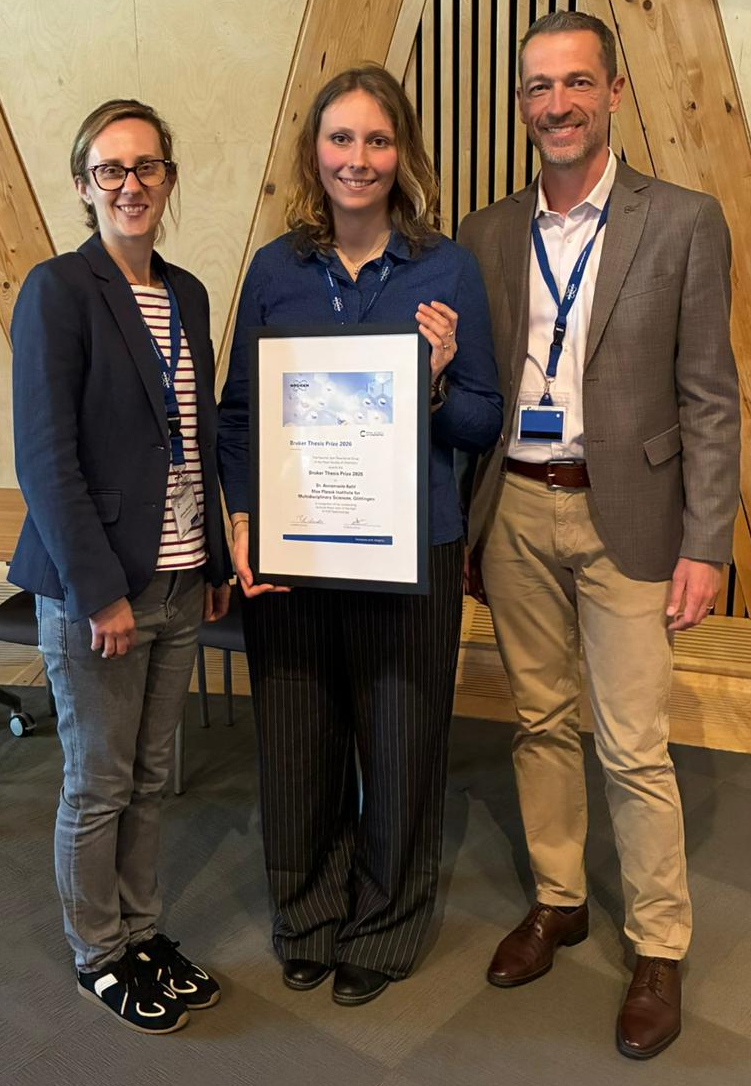
2026: Development of Analysis- and Simulation-Routines for ENDOR Spectroscopy, Dr Annemarie Kehl, Max Planck Institute for Multidisciplinary Sciences, Göttingen, Germany.
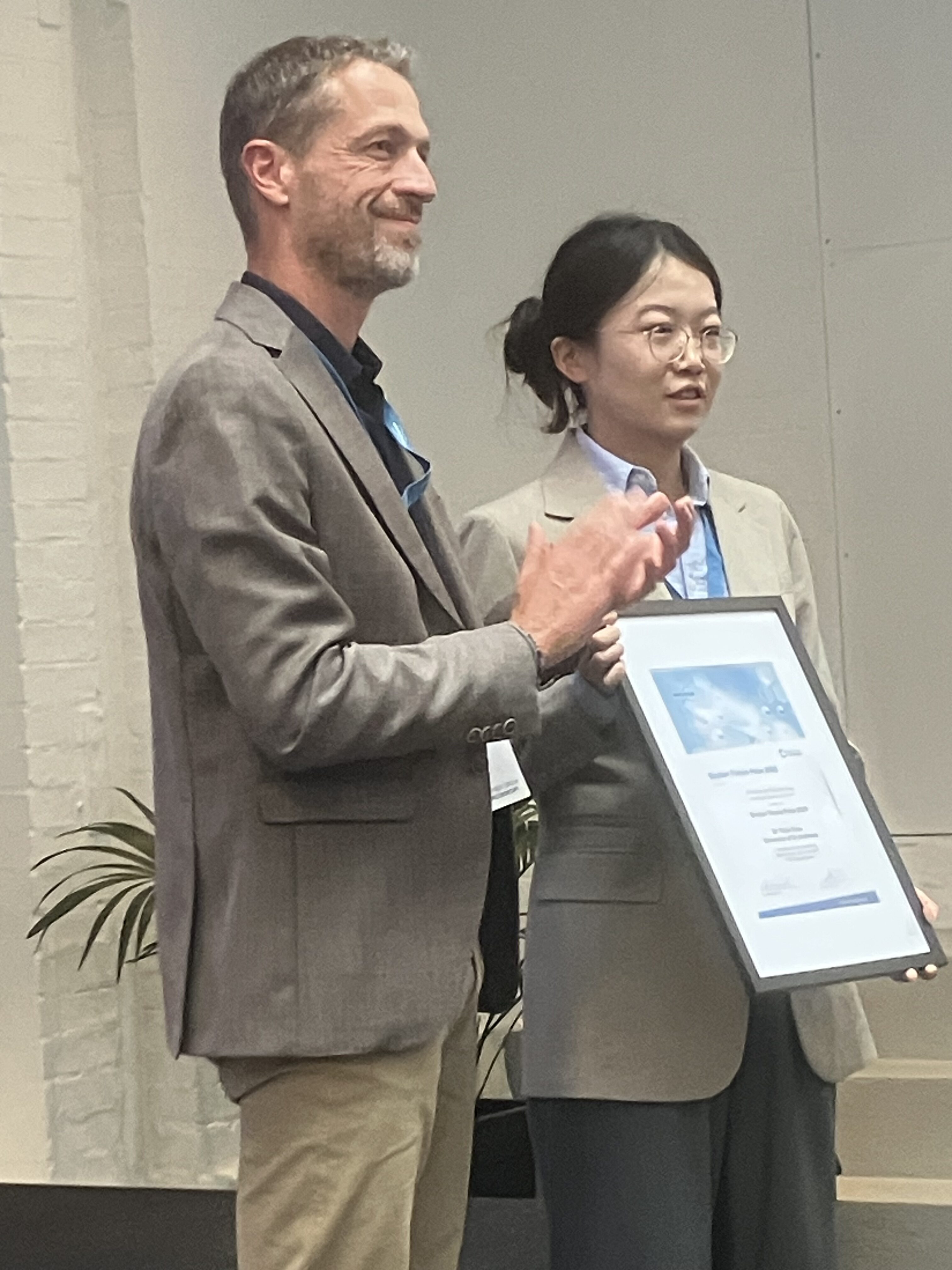
2025: Methodology development of high sensitivity pulsed EPR and DNP, Dr Yujie Zhao, University of St Andrews, UK.
2024: 17O Hyperfine Spectroscopy to Investigate Water Binding to Organic Radicals, Dr Fabian Hecker, MPI for Multidisciplinary Sciences Göttingen, Germany.
2023: “New electron spin resonance experiments with tailored waveform excitation”, Dr Nino Wili, ETH Zürich, Switzerland.
2022: “Dynamical decoupling for quantitative decoherence analysis via noise spectroscopy”, Dr Janne Soetbeer, ETH Zürich, Switzerland.
2021: “Combining Film Design and Spectroscopic Strategies to Elucidate Triplet Dynamics in Molecular Systems”, Dr Daphné Lubert-Perquel, Imperial College London, UK.
2020: “Nanoscale nuclear magnetic resonance with chemical structure resolution”, Dr Nabeel Aslam, University of Stuttgart, Germany. (Lecture postponed to 2021 meeting)
2019: “Improving the Sensitivity and Utility of Pulsed Dipolar Experiments in EPR at 94 GHz”, Dr Claire Motion, University of St Andrews, UK.
2018: “Magnetic Resonance with Quantum Microwaves”, Dr Audrey Bienfait, CEA-Saclay, France.
2017: “Frequency-Swept Microwave Pulses for Electron Spin Resonance”, Dr Andrin Doll, ETH Zürich, Switzerland.
2016: “Uncrossing wires: EPR reveals spin delocalization in porphyrin nanoassemblies”, Dr Claudia Tait, University of Oxford, UK.
2015: “Frequency Dependence of Nitroxide Relaxation from 250 MHz to 34 GHz”, Dr Joshua Biller, University of Denver, US.


If you are a past prize-winner and wish your photograph to be removed please contact the Web Master.